
Why Sleep Matters for High School Football Players (More Than You Think)
Friday night lights. Early morning lifts. Long school days. Film. Practice. Repeat. High school football players are constantly pushing their bodies—and one of the most overlooked parts of their performance isn’t in the weight room or on the field… It’s sleep. If your athlete isn’t getting enough rest, it doesn’t matter how talented or hardworking they are—they’re not performing at their full potential.
PLAYER SUPPORT
4/26/20262 min read
This post may contain affiliate links, which means I may earn a commission if you purchase through my links—at no extra cost to you.
How Much Sleep Do High School Athletes Really Need?
Most high school athletes need 8–10 hours of sleep per night.
Not 6. Not “I’ll catch up on the weekend.”
Consistent, quality sleep is what allows their bodies to recover, grow, and perform.
And yet… most teens are running on far less.
Why Sleep Is a Game-Changer for Football Players
Sleep isn’t just about feeling rested—it directly impacts performance on the field.
1. Better Focus & Decision-Making
Football is fast. Players have seconds to react. Lack of sleep slows reaction time and increases mistakes.
2. Muscle Recovery & Strength Gains
Growth hormone (which helps muscles repair and grow) is released during deep sleep.
Less sleep = less recovery = slower progress.
3. More Energy & Endurance
Fatigue shows up quickly when players are sleep-deprived—especially in the heat or late in games.
4. Reduced Injury Risk
Tired athletes are more likely to get hurt. Studies consistently show a higher injury rate in athletes who don’t get enough sleep.
Signs Your Athlete Isn’t Getting Enough Sleep
If you’re seeing these, sleep could be the issue:
Constant fatigue or low energy
Struggling to wake up for school or workouts
Decreased performance at practice
Irritability or mood swings
More frequent minor injuries
The Reality: Why It’s So Hard for Football Players to Sleep Enough
Let’s be honest—high school athletes are BUSY.
Late practices and games
Homework and studying
Screen time (phones, gaming, social media)
Early morning workouts
It adds up quickly—and sleep is usually the first thing sacrificed.
Simple Ways to Help Your Athlete Get Better Sleep
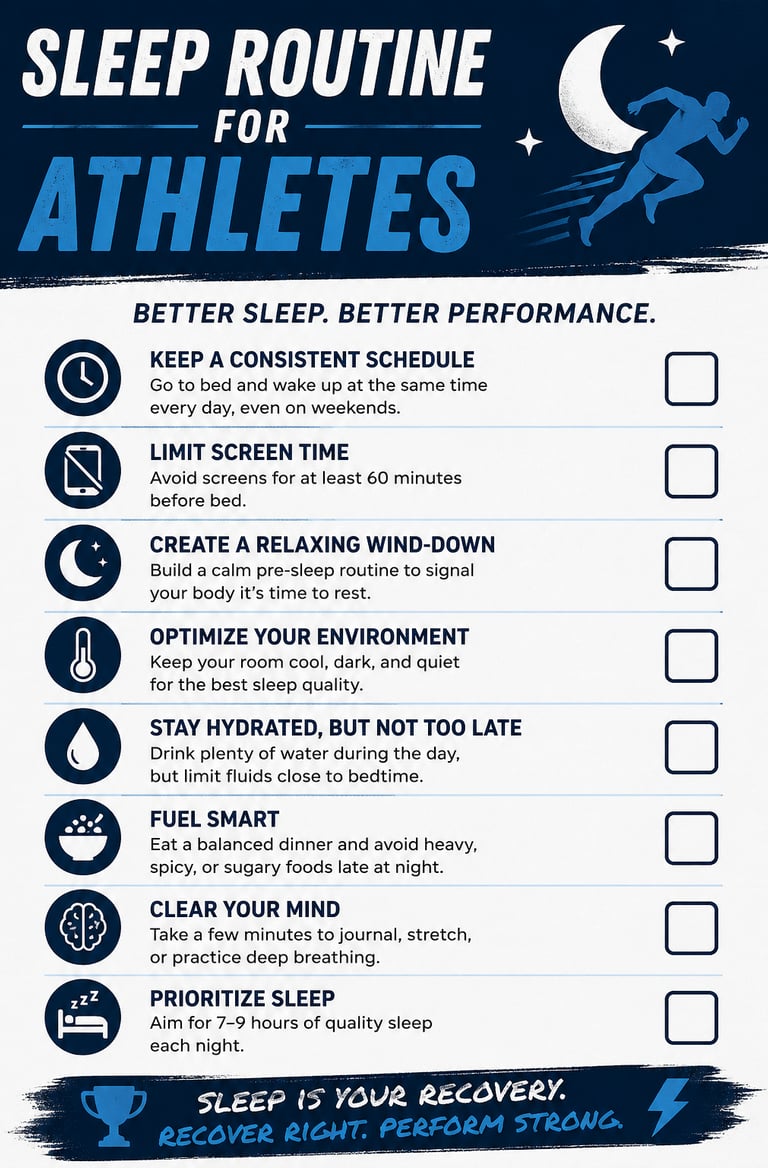
You don’t need a perfect routine—just a few consistent habits can make a big difference.
1. Set a Consistent Bedtime
Even on weekends. Consistency helps regulate their internal clock. A sunrise alarm clock can help.
2. Limit Screens Before Bed
Encourage shutting down phones 30–60 minutes before sleep. (Yes… this one is tough, but it works.)
Help reduce stimulation before bed with blue light blocking glasses.
3. Create a Cool, Dark Sleep Environment
Better sleep starts with the right environment—dark room, cool temperature, minimal distractions. Use of a Sleep sound machine and a weighted blanket can help.
4. Hydrate Early, Not Late
Hydration is important—but chugging water right before bed leads to interrupted sleep. Large BPA-free water bottle (with time markers) is helpful.
5. Plan Ahead on Game Nights
Late games happen—help them wind down quickly afterward so they still get enough rest. Use a recovery tracker to reinforce recovery as part of performance.
A Note to Football Parents
We focus so much on gear, training, nutrition, and performance…
But sleep is the foundation of all of it.
If your athlete is serious about getting better, stronger, and staying healthy—sleep isn’t optional.
It’s part of the game plan.
Final Thought
You can have the best helmet, the best cleats, and the best training…
But if your athlete is running on empty, it will show.
Prioritize sleep—and you’ll see the difference on and off the field.
📌 Don’t Forget to Save This
If this helped you, pin it so you’re always prepared for game day and share it with another football mom who needs it!